2026 Best Bathroom Filter Shower Head for Hard Water?
Hard water is more than a faint white ring on a showerhead. It contains dissolved minerals, mainly calcium and magnesium, that can leave scale on fixtures and glass. The U.S. Geological Survey classifies water above 120 milligrams per liter as calcium carbonate as hard. Above 180 milligrams per liter, it is very hard. A home’s actual reading matters more than a product label.
That distinction matters. A Bathroom Filter Shower Head may reduce certain impurities, but “filter” does not automatically mean “water softener.” NSF/ANSI 177 covers shower filtration claims for reducing free available chlorine; it does not certify hardness removal. For hard-water concerns, check the manufacturer’s tested claims and look for independent certification relevant to the specific reduction advertised. A simple water-hardness test can help you compare those claims with your own supply. Notice the practical clues, too: chalky spots on the shower door, crust around the spray nozzles, or soap that rinses away slowly. These signs are useful, but they cannot replace a water test. Not a cure-all. This guide compares the 2026 options with that limit in view, including filtration evidence, replacement costs, flow, and everyday maintenance. Some products may improve one part of the shower experience while leaving mineral scale largely unchanged. That is worth saying plainly. A careful choice starts with knowing what is in your water.
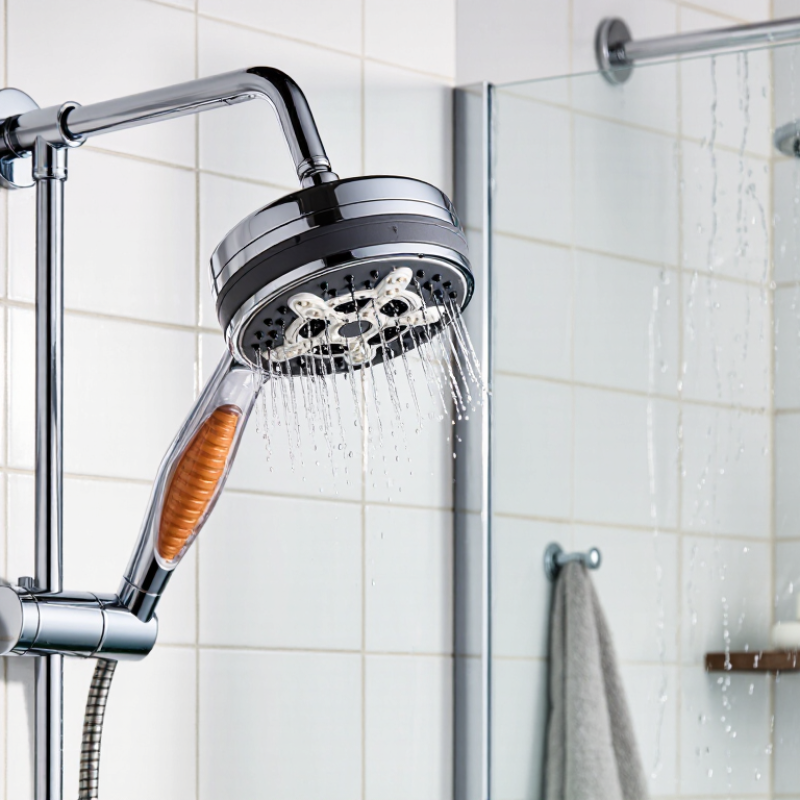
Define Hard Water: USGS Rates 121–180 mg/L as CaCO₃ as Hard
2026 Best Bathroom Filter Shower Head for Hard Water?
The USGS classifies water with 121–180 mg/L of hardness, measured as calcium carbonate (CaCO₃), as hard. That number describes dissolved minerals, mainly calcium and magnesium—not chlorine, sediment, or every substance a shower filter might reduce. A simple water report or test can help confirm whether your supply falls in this range. A white crust around the showerhead is a useful clue, but it cannot tell you the exact hardness. Easy to misread.
When comparing shower filters, check what their performance data actually covers. NSF/ANSI 177 evaluates shower filtration systems for reduction of free available chlorine; it is not a water-softening standard. A filter may change chlorine exposure without removing enough calcium and magnesium to prevent mineral scale. For persistent hardness, a water-softening system is designed to address those minerals. It is tempting to blame every dry-feeling shower on hard water, but skin feel alone is not a reliable measurement. Look for test results tied to a named contaminant and standard, then compare them with your water report. That small detail matters.
2026 Best Bathroom Filter Shower Head for Hard Water? - Define Hard Water: USGS Rates 121–180 mg/L as CaCO₃ as Hard
| Topic |
Measured value or fact |
What it means when choosing a shower filter |
| Soft water |
0–60 mg/L as CaCO₃ |
USGS classification; dissolved calcium and magnesium hardness is relatively low. |
| Moderately hard water |
61–120 mg/L as CaCO₃ |
USGS classification; scale and soap-related effects can become more noticeable. |
| Hard water |
121–180 mg/L as CaCO₃
Approximately 7.1–10.5 grains per US gallon |
This is the USGS “hard” range. Look for independent test data that specifically measures hardness reduction—not just chlorine or odor reduction. |
| Very hard water |
More than 180 mg/L as CaCO₃ |
A showerhead cartridge may have limited capacity; verify its tested reduction and replacement interval for the actual water conditions. |
| What hardness measures |
Primarily dissolved calcium and magnesium, reported as an equivalent concentration of calcium carbonate (CaCO₃). |
A chlorine-reduction claim is not the same as a calcium-and-magnesium hardness-reduction claim. |
| Activated carbon |
Commonly used to reduce certain substances such as chlorine, depending on the filter design and test conditions. |
Activated carbon alone is not a conventional water-softening process and should not be assumed to remove hardness. |
| Vitamin C (ascorbic acid) |
Can neutralize chlorine under suitable conditions; performance depends on water chemistry and filter design. |
Chlorine neutralization does not, by itself, remove dissolved calcium or magnesium. |
| Ion exchange |
A recognized softening process that exchanges calcium and magnesium ions for other ions, commonly sodium. |
For a showerhead-sized unit, check verified hardness-reduction results, capacity, flow rate, and cartridge life; performance varies by product and water conditions. |
| Useful verification |
Compare an actual water-hardness test before and after treatment, reported in the same units. |
Prefer clearly stated test methods and replacement limits. A general “filter” or “purification” claim does not establish hardness removal. |
Source for hardness categories: U.S. Geological Survey (USGS), Water Science School, “Hardness of Water.” Conversion uses 1 grain per US gallon ≈ 17.1 mg/L as CaCO₃.
Test Your Supply: Measure Calcium and Magnesium in mg/L
Before choosing a shower filter for hard water, test your supply. Ask a certified laboratory to measure calcium and magnesium, reported separately in mg/L. A home strip can offer a quick screening, but check its instructions: many strips estimate total hardness rather than each mineral. For a useful sample, follow the lab’s collection directions and note whether the water came from a tap or a private well. Small details matter.
The U.S. Geological Survey classifies hardness as soft at 0–60 mg/L, moderately hard at 61–120, hard at 121–180, and very hard above 180 mg/L, expressed as calcium carbonate. That is not the same as either mineral’s individual concentration. USGS uses this conversion: hardness ≈ 2.497 × calcium + 4.118 × magnesium, with all values in mg/L. Numbers matter. A shower filter may reduce chlorine or sediment, but ordinary filter media do not necessarily remove dissolved calcium and magnesium; verify the tested contaminant and performance data before buying. If your report shows high hardness, a water professional can assess whether treatment at the supply line is more appropriate. I would not infer mineral levels from spots on a shower door alone. Useful clue, imperfect evidence.
Check Filter Claims: NSF/ANSI 177 Covers Chlorine, Not Water Hardness
A shower filter may improve chlorine odor, but that does not mean it removes the minerals that make water hard. NSF/ANSI 177 is a shower filtration standard focused on reducing free available chlorine under specified test conditions. It does not certify a product to soften water or remove calcium and magnesium.
That distinction matters.
Hard water often leaves white scale on shower glass, stiffens towels, and makes soap harder to rinse away. A filter certified for chlorine reduction may help with chlorine-related smell or exposure, depending on the test results. It is not a reliable fix for mineral buildup. I would check the exact certification listing and test data, not rely on vague phrases such as “hard water protection.” Even a clear label can be easy to misread.
For hardness, look for a treatment method specifically designed to reduce calcium and magnesium, such as ion exchange, and confirm its performance claims for your water conditions. A simple hardness test can help establish a baseline before buying anything. Results vary. I’d also admit that shower filters can be appealing because they are easy to install, but that convenience can make their limits less obvious.
If scale is the main problem, a chlorine-focused filter may disappoint.
Choose Treatment by Need: Ion Exchange Removes Hardness Minerals
Hard water leaves calcium and magnesium behind as white scale on shower glass, tile, and spray nozzles. Ion exchange targets these minerals directly. Its resin beads swap calcium and magnesium ions for other ions, commonly sodium or potassium. The process can reduce hardness, but performance depends on the cartridge design, water flow, and how much resin it contains. Not every shower filter uses enough resin to make a noticeable difference.
Check the filter’s stated capacity and whether it is tested for hardness reduction, not just chlorine or sediment. A carbon layer may improve odor, but it does not remove hardness minerals. Small shower cartridges also have limited contact time with fast-moving water. Results may fade as the resin becomes exhausted. That part is easy to miss.
If scale is your main concern, compare hardness readings before and after installation with a water test kit. Watch for mineral spots on a glass panel over several weeks, too. Replace the cartridge on schedule, and reassess if deposits return early. A shower filter may help at one fixture, but it is not a whole-home softener. Even so, the right ion-exchange media can make a practical difference where hardness is moderate.
2026 Best Bathroom Filter Shower Head for Hard Water?
Choose treatment by need: ion exchange targets hardness minerals.
Bars show the minimum hardness value for each category, in mg/L as calcium carbonate: soft (0–60), moderately hard (61–120), hard (121–180), and very hard (above 180). Ion-exchange systems can remove calcium and magnesium; a showerhead cartridge only softens water if its media and capacity are specifically rated for hardness reduction.
Compare Showerheads: Verify Flow Rate and NSF/ANSI 177 Certification
Choosing a 2026 showerhead for hard water means checking both flow rate and what its certification actually covers. The U.S. Geological Survey classifies water as hard at 121–180 mg/L of calcium carbonate, and very hard above 180 mg/L. Check your local water report; the scale matters. NSF/ANSI 177 addresses shower filtration performance, including reduction of free available chlorine. It does not certify that a showerhead removes the calcium and magnesium that cause hardness. That distinction is easy to miss on product pages.
Compare flow rates under stated test conditions. The U.S. EPA WaterSense specification sets a maximum flow of 2.0 gallons per minute for labeled showerheads at 80 psi. Your home’s pressure may differ, so the listed rate may not match the feel of water at your shower. Look for the tested flow rate and clear NSF/ANSI 177 certification details, not just the word “filter.” Even a certified filter may not soften hard water. If mineral buildup is the problem, verify the product’s specific claims before buying; I would not assume a shower filter solves it.