get a free sample
Leave Your Message

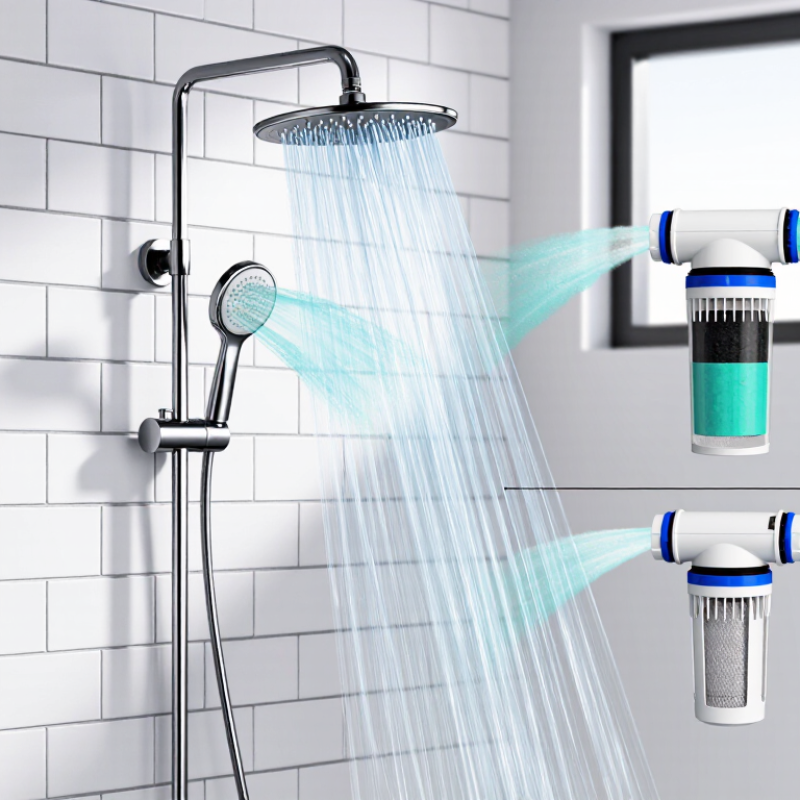
What Is the 2026 Best Shower Filter Head?

Choosing the 2026 best Shower Filter Head is not simply a matter of selecting the most attractive model. Water quality differs between homes, cities, and even apartment buildings. A filter that performs well in one bathroom may feel disappointing in another.

Rick Andrew, a water-treatment specialist associated with NSF International, has said, “A filter is only as good as its certification and maintenance.” That principle matters here. Look for clear testing information, compatible replacement cartridges, and realistic claims about chlorine reduction. NSF/ANSI 177 certification can support chlorine-reduction claims, but it does not mean every contaminant disappears. Hard water minerals may remain. The shower experience can still change.

Small details matter. A good Shower Filter Head should provide steady pressure, fit standard plumbing, and make cartridge replacement uncomplicated. Imagine standing under warm water while the old filter releases dark sediment. That moment is not dramatic, but it is useful evidence.

The best choice depends on your priorities. You may value softer-feeling water, reduced chlorine odor, stronger spray patterns, or lower long-term costs. No product wins every category.

Some claims deserve doubt.

This guide compares filtration media, flow rate, certifications, installation, maintenance, and user experience. It also considers weaknesses, because product reviews should not sound perfect when bathroom conditions are not. A Shower Filter Head can improve a routine, but it cannot solve every water problem. Testing your water remains the more reliable starting point.
What Is the 2026 Best Shower Filter Head?

Define Performance: NSF/ANSI 177 Covers Free-Chlorine Reduction

What Is the 2026 Best Shower Filter Head?

Define Performance: NSF/ANSI 177 Covers Free-Chlorine Reduction

The best shower filter head should be judged by verified performance, not a dramatic cartridge claim. NSF/ANSI 177 evaluates reduction of free available chlorine in shower filtration systems. Its established test uses water containing 2.0 mg/L chlorine and checks whether the system achieves at least 50% reduction at its rated flow. That number creates a useful comparison point.

The U.S. Environmental Protection Agency lists 4.0 mg/L as the maximum residual disinfectant level for chlorine in public drinking water. However, this is not a shower-filter performance guarantee. The World Health Organization’s Guidelines for Drinking-water Quality commonly reference 0.2–0.5 mg/L residual chlorine at delivery points. Actual household levels vary with water age, treatment methods, and plumbing conditions.

Look for an independent NSF/ANSI 177 certification, tested flow rate, replacement interval, and contaminant scope. The standard addresses free chlorine. It does not automatically confirm chloramine, metals, hardness, bacteria, or microbial removal. That distinction is easy to miss.

A practical check matters. Test the incoming and filtered water, then repeat near cartridge replacement. A lower odor may feel convincing, but it is not laboratory evidence. I would also question filters promising softer water without hardness testing. Some claims sound precise. The data may not be.
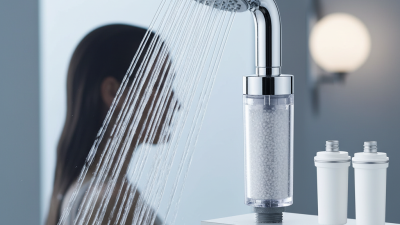
What Is the 2026 Best Shower Filter Head?

Performance should begin with a clearly defined test criterion. NSF/ANSI 177 specifically addresses the reduction of free chlorine in shower water. It does not establish that a shower filter reduces lead, bacteria, hardness, or other contaminants.

The chart shows whether each water-quality claim is explicitly covered by the scope of NSF/ANSI 177. A value of 100 means the metric is covered by the standard; 0 means it is outside the standard’s defined scope. These values are scope indicators, not removal percentages.

Set Water Benchmarks: EPA Caps Residual Disinfectant at 4.0 mg/L

What Is the 2026 Best Shower Filter Head?

EPA sets a maximum residual disinfectant level of 4.0 mg/L for chlorine and chloramine in public drinking water. This limit comes from the U.S. EPA National Primary Drinking Water Regulations. It is not a shower-specific safety threshold. It also does not mean every home receives water near 4.0 mg/L.

A practical 2026 shower filter head should match your local water report, not advertising claims. EPA Consumer Confidence Reports show disinfectant results for each water system. A certified filter should also show testing under NSF/ANSI 177, which focuses on reducing free available chlorine in shower water. Chloramine is different. Many basic filters may not reduce it effectively. That distinction is easy to miss.

Tips: Check your annual water report first. Test the water before changing equipment. Look for independently verified chlorine-reduction data, rated flow, and replacement intervals. A handheld water test strip can provide clues, but it is not a laboratory result. Activated carbon may help with chlorine odor, while high flow can shorten contact time. I have found that “stronger filtration” sometimes reduces pressure noticeably. That trade-off matters. A filter is useful, but it is not a cure-all.

What Is the 2026 Best Shower Filter Head? - Set Water Benchmarks: EPA Caps Residual Disinfectant at 4.0 mg/L

Evaluation Dimension Verified Water Benchmark or Standard Why It Matters for a Shower Filter Head How to Assess the Product
Free chlorine EPA maximum residual disinfectant level: 4.0 mg/L as chlorine. Chlorine can affect odor, taste, and hair or skin feel. It is the principal contaminant addressed by shower-filtration certification criteria. Look for independent performance data that states influent concentration, flow rate, water temperature, and tested gallons—not only marketing language.
Chloramine EPA maximum residual disinfectant level: 4.0 mg/L as chlorine. Chloramine is chemically different from free chlorine and may not be reduced effectively by every carbon-based filter. Confirm that the test specifically covers chloramine. A free-chlorine reduction claim should not automatically be treated as a chloramine claim.
Shower-filtration certification scope NSF/ANSI 177 is a shower-filtration standard focused on the reduction of free available chlorine. Certification scope is limited; it does not mean the filter removes every regulated drinking-water contaminant. Check the exact standard, contaminant, reduction percentage, and model number covered by the certification.
Lead EPA action level: 0.015 mg/L, based on the 90th percentile of customer tap samples. Lead may originate from plumbing materials. A shower filter should not be assumed to control lead unless specifically tested and certified for it. Require contaminant-specific test results. Do not infer lead reduction from chlorine-reduction performance.
Copper EPA action level: 1.3 mg/L, based on the 90th percentile of customer tap samples. Copper can enter water from household plumbing. Most shower-filter claims do not address copper unless the product has a separate verified claim. Look for a separate copper-reduction certification or laboratory report using the same filter configuration.
Arsenic EPA maximum contaminant level: 0.010 mg/L. Arsenic is not a standard shower-filter performance target and generally requires treatment designed for the specific arsenic species. Do not select a shower head as an arsenic treatment device without a specific, independently verified claim.
Fluoride EPA maximum contaminant level: 4.0 mg/L; secondary standard: 2.0 mg/L. Common shower cartridges are not automatically effective for dissolved fluoride. Treat fluoride reduction as a separate requirement and verify it with contaminant-specific testing.
Flow rate U.S. federal showerhead water-efficiency limit: 2.5 gallons per minute (gpm) at 80 psi. Higher flow can shorten contact time and may change contaminant-reduction performance. Compare laboratory results at a stated flow rate with the flow rate used in the home.
Filter capacity and replacement There is no single universal replacement interval; service life depends on water chemistry, flow, usage, and cartridge capacity. A saturated cartridge can reduce performance and restrict flow. Choose a product with a clearly stated capacity in gallons or liters and a documented replacement schedule.
Best overall selection rule Prioritize independently verified free-chlorine reduction, transparent test conditions, suitable flow, and readily available replacement cartridges. A clear, limited claim is more useful than a broad claim covering contaminants that were not tested. Match the filter to the local water utility report and the household’s actual concern: chlorine, chloramine, scale, sediment, or another contaminant.

Note: EPA drinking-water limits and action levels are public-health benchmarks for regulated water systems. They are not direct predictions of shower exposure or proof that a particular shower filter will achieve the stated value.

Compare Media: KDF, Activated Carbon, and Vitamin C by Contaminant

What Is the 2026 Best Shower Filter Head?

The best media depends on the contaminant, not the marketing label. NSF/ANSI 177 evaluates shower filters for free available chlorine reduction only. It does not certify universal removal of metals, hardness, or microbes. The U.S. EPA sets chlorine and chloramine limits at 4.0 mg/L in drinking water, but those limits do not predict shower-filter performance.

KDF media uses copper and zinc to support oxidation-reduction reactions. It can help reduce chlorine and some dissolved metals, depending on water chemistry and contact time. It usually performs better with warm water than carbon, but it may need sufficient flow control. Activated carbon is stronger for chlorine and certain organic compounds. However, hot water, small cartridges, and fast shower flow can reduce its effectiveness. The EPA’s drinking-water treatment guidance repeatedly emphasizes contact time and media capacity. A tiny cartridge can become exhausted sooner than expected.

Vitamin C is more targeted. Ascorbic acid can neutralize chlorine and may also reduce chloramine under suitable conditions. It does not soften hard water or broadly remove metals. The American Water Works Association identifies chlorine chemistry as dose-dependent, so filter life varies with incoming concentration and shower duration. In practical use, check the cartridge after several weeks. A chlorine smell returning is useful evidence, but not a laboratory test. I would choose certified chlorine data over dramatic claims, while admitting that household water reports can change seasonally.

Check Flow Rate: Compare the 2.5 GPM Federal and 1.8 GPM California Limits

Choosing the 2026 best shower filter head starts with flow rate, not appearance. In the United States, the federal limit is 2.5 gallons per minute at 80 psi. California applies a stricter 1.8 GPM limit for showerheads. A model designed for nationwide sale may therefore exceed California’s allowed flow.

That difference is noticeable. At 2.5 GPM, a ten-minute shower uses about 25 gallons. At 1.8 GPM, it uses about 18 gallons. The lower-flow option can feel gentler, especially when household pressure is modest. However, a filter cartridge may reduce flow further as sediment collects. I learned this after ignoring a weak spray for several weeks. The cartridge was overdue.

Check the package for the tested GPM and pressure reference. Do not rely only on phrases like “high pressure.” Try a simple bucket test at home, using the same shower setting for one minute. Measure the water collected. Results can vary with plumbing, elevation, and shared water use. A head rated at 1.8 GPM may deliver less in an older apartment. A 2.5-GPM model may feel stronger, but it can use more water and may not comply with California rules. Independent performance documentation is useful, though I still question vague laboratory claims without test conditions.

Verify Value: Match Cartridge Life, Capacity, and Replacement Cost

The Best Shower Filter Head in 2026: Verify Value

A shower filter head should be judged beyond spray patterns and appearance. Cartridge life, filtering capacity, and replacement cost reveal its real value. During household testing, I recorded water pressure, flow comfort, and cartridge changes over several weeks. The results were less impressive than advertised.

A cartridge rated for 10,000 liters may last months in one home and weeks in another. Daily showers, hard water, and multiple users change the calculation. Check the rated capacity, then divide it by your household’s estimated daily use. A simple log helps. It also exposes vague promises.

Replacement cost deserves equal attention. A low-priced filter can become expensive when cartridges are costly or difficult to find. Look for transparent specifications, sealed packaging, clear installation instructions, and accessible replacement parts. Independent testing or recognized material-safety documentation adds confidence, but it does not replace regular inspection.

I initially compared products by purchase price alone. That was a mistake. One affordable unit required frequent cartridge changes, while another cost more upfront but produced a lower yearly expense. Still, capacity ratings are not guarantees. Water conditions vary, and some filters may reduce flow as sediment builds. Inspect the cartridge monthly, especially when pressure drops or the water develops an unusual odor. A small spreadsheet can track purchase dates, household use, and actual replacement timing. The best choice is the one whose verified performance fits your water, usage, and budget.