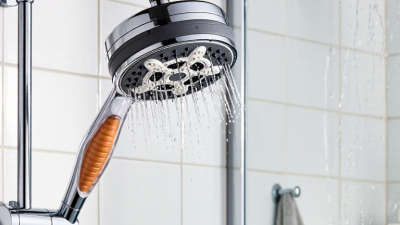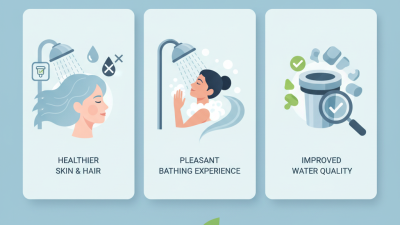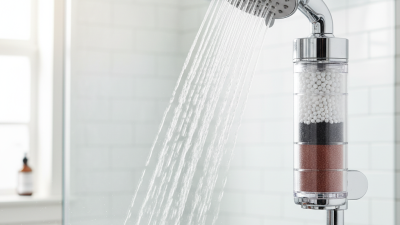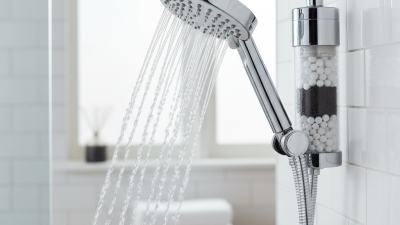
Choosing a Shower Filter supplier in China takes more than comparing prices and product photos. A polished catalog can hide important differences in filter media, cartridge design, assembly quality, and testing practices. Ask how the supplier controls incoming materials and checks finished units. Request clear specifications, recent test reports, and samples from the same production line you may order from. Details matter.
A reliable evaluation also considers communication and practical production limits. Confirm minimum order quantities, sample fees, lead times, packaging options, and how defects are handled. If a supplier claims the filter reduces chlorine, sediment, or other substances, ask what test method supports that claim and whether the results apply to the exact model. Independent verification can help, but reports should be current and traceable. Do not treat a certificate image as proof on its own.
Factory visits or third-party audits may provide useful context, though they cannot guarantee every future batch. Compare answers across several suppliers, and note whether technical staff respond directly or avoid specific questions. A low quotation may make sense, but only when product details and service expectations are equally clear. No supplier is perfect. Even a careful sourcing process can miss something, so define inspection criteria before placing a larger order. The best choice is usually the partner whose evidence, product consistency, and communication fit your needs—not simply the one with the lowest price.
Before contacting a shower filter supplier, define the problem the product must solve.
Is your target market concerned about chlorine odor, dry-feeling skin, sediment, or hard water? These needs differ by location and household. The USGS reports that hard water is common across the United States, but hardness is not the same as chlorine contamination. A basic shower filter may not soften water, so check the media, test conditions, and stated reduction claims. Be specific.
Then describe your buyer and use case: apartment residents, families, hotels, or online retail customers. The WHO/UNICEF Joint Monitoring Programme’s 2023 report estimated that 2.2 billion people lacked safely managed drinking water in 2022; this is a drinking-water access measure, not a shower-filter demand estimate. Keep that distinction clear.
For product verification, ask whether performance testing follows NSF/ANSI 177, which addresses reduction of free available chlorine in shower filtration systems. Request the test report, expected cartridge life, flow rate, replacement cost, and compatible inlet sizes.
Also confirm local water conditions before choosing a filter. A neat specification sheet can still miss the real problem. That happens.
Define your requirements in measurable terms, then compare suppliers against the same checklist.

When comparing shower filter suppliers in China, separate trading companies, assembly factories, and vertically integrated manufacturers. A trading company may coordinate sourcing, but it may not control cartridge production or final testing. Ask who makes the housing, filter media, and replacement cartridges. Request a factory address, process flow, and recent production photos. Small details matter: check whether workers seal each cartridge by hand or use a documented line inspection. It can be awkward to ask. Ask anyway.
Manufacturing capability should match your product, not just a polished catalog. Confirm experience with injection molding, media filling, leak checks, and batch traceability. Request test records for flow rate, pressure, and material composition, then verify the test method and sample conditions. A certificate alone does not show how consistently each batch performs. This is easy to miss. For custom products, clarify who owns the tooling and how design changes are approved.
Water context also deserves care. The WHO/UNICEF Joint Monitoring Programme’s 2023 report estimated that 2.2 billion people lacked safely managed drinking water in 2022. That figure describes drinking-water access, not shower-filter demand or product performance. Use it as context, not proof of a market claim. A credible supplier should explain its own test evidence and limitations plainly. Sometimes the answer is incomplete. Note that, and ask for the missing data before comparing quotations.
How to Find the Best Shower Filter Supplier in China? — Identify Supplier Types and Manufacturing Capabilities
| Supplier Type | Typical Manufacturing Capabilities | Potential Advantages | Points to Check | Best Suited For |
|---|---|---|---|---|
| Finished-product manufacturer | May handle filter-housing production, cartridge assembly, media filling, leak checks, and finished-product packing in-house. Processes vary by factory. | Can offer closer control over assembly and production scheduling when key processes are genuinely in-house. | Ask which processes and components are made in-house, how batches are traced, and whether production samples match the proposed specifications. | Buyers seeking a regular supply of a defined shower-filter design. |
| OEM or ODM manufacturer | OEM suppliers make products to buyer-provided specifications. ODM suppliers may offer existing designs for adaptation, such as changes to housing, cartridge format, or packaging. | May support private-label projects and product customization, subject to tooling, design, and order requirements. | Clarify design ownership, tooling ownership, minimum order quantities, change-control procedures, and which performance claims can be substantiated. | Brands that need a customized product or private-label production. |
| Trading company or sourcing supplier | Usually coordinates sourcing, communication, purchasing, or export arrangements. Manufacturing is performed by one or more partner factories. | Can simplify communication or combine sourcing for buyers who do not manage factory relationships directly. | Request the actual factory identity, confirm who controls quality checks, and establish responsibility for specifications, defects, and delivery issues. | Buyers who need sourcing support or consolidated purchasing. |
| Filter-media or cartridge specialist | May supply or process media such as activated carbon, calcium sulfite, KDF-type copper-zinc media, or sediment-filter materials, and may assemble cartridges. | Can provide more focused information about media options, cartridge construction, and material documentation. | Verify media composition, grade, supplier documentation, compatibility with the cartridge, and the evidence behind any stated reduction claims. | Projects requiring a specific media configuration or cartridge-development support. |
| Plastic-parts or injection-molding manufacturer | May produce molded components such as filter housings, caps, threads, or internal supports. It may not fill media or assemble complete filters. | Useful for buyers with an established filter design who need control over plastic parts or tooling. | Check material specifications, mold ownership, dimensional inspection, thread compatibility, and whether another supplier will perform final assembly. | Projects focused on custom housings or replacement plastic components. |
| Assembly and packaging contractor | May assemble sourced components, load cartridges, apply labels, and pack finished goods without manufacturing the filter media or molded parts. | Can provide a defined assembly or packing stage when component suppliers are managed separately. | Identify all upstream component sources and confirm incoming inspection, assembly instructions, lot traceability, and finished-product checks. | Buyers coordinating separate suppliers for parts, media, and packaging. |
Evaluation note: Supplier type alone does not confirm product performance. Ask for current, product-specific test reports and supporting documentation for any water-quality or contaminant-reduction claims; results depend on the tested product, test conditions, and applicable requirements.
When evaluating a Chinese shower-filter supplier, request test reports for the exact model you plan to buy. Check the model number, test date, laboratory, and measured results. A factory certificate alone does not prove that a particular filter performs as claimed. WHO and UNICEF’s 2023 Joint Monitoring Programme reported that 2.2 billion people lacked safely managed drinking-water services in 2022. That figure concerns drinking water, not shower water, but it underscores why water-quality claims deserve careful scrutiny.
Ask whether testing follows NSF/ANSI 177, a standard for shower filtration systems that addresses free available chlorine reduction. Confirm what the test actually measured, under which water conditions, and for how long. If a supplier claims removal of metals or other substances, request evidence for each specific claim; chlorine results do not establish broader performance. Check that the laboratory is independent and appropriately accredited. Small details matter: a report for a similar-looking cartridge is not enough.
Review material-safety documentation and destination-market requirements before placing an order. Request batch traceability, a bill of materials, and records showing that production units match tested samples. Verify certificates directly with the issuing organization where possible. Still, paperwork can mislead. A tidy PDF may hide an outdated test or a different cartridge design. Ask for dated, model-specific records, then compare them against a sample unit and its packaging.
When comparing shower filter suppliers in China, test samples under the same water pressure and temperature. Request one assembled unit and spare cartridges. Check for leaks, loose threads, uneven spray, and access to the filter media. Small details matter. Ask for a test report that names the tested model, method, and reduction claim. NSF/ANSI 177 addresses reduction of free available chlorine in shower filtration systems; it does not prove removal of every contaminant. That distinction helps keep product claims specific.
Compare full landed costs, not just the unit price. Include cartridges, packaging, tooling, sample freight, and replacement-part availability. Ask suppliers to quote the same order quantity and delivery terms. The U.S. EPA’s WaterSense program estimates that labeled showerheads can save an average family 2,700 gallons of water yearly. That figure concerns water-efficient showerheads, not filter performance, but it offers useful context when assessing flow and design.
Supplier communication is part of the evaluation. Send identical questions about materials, test methods, lead time, and defect handling, then compare how directly each supplier answers. Request photos of the sample’s internal structure and a dated production schedule. A neat quotation is not proof of reliable execution; replies can be quick yet incomplete. I would leave room for a follow-up round, because one missed specification can distort an otherwise fair price comparison.
A reliable shower filter supplier should prove what its factory can deliver, not just quote a monthly capacity. Ask for recent output records, shift patterns, and the line’s bottleneck: cartridge filling, housing assembly, or leak testing. Request a pilot batch and compare its flow rate, dimensions, and cartridge fit with the approved sample. Ask how rejected units are recorded. A neat spreadsheet is not enough.
Shipping needs the same scrutiny. The World Bank’s 2023 Logistics Performance Index placed China 19th among 139 economies, with a score of 3.7. That national ranking cannot predict one supplier’s performance, so check actual dispatch records and packaging details. Sea-Intelligence’s 2024 Global Liner Performance data put average container-shipping schedule reliability at about 56%. Build in buffer time. Ask who handles delays and whether cartons protect filter housings from crushing and moisture.
Long-term reliability shows up after the first order. Check whether replacement cartridges use stable dimensions and whether material or process changes are communicated before production. Request lot-level inspection records, a written defect-response timeline, and the supplier’s spare-parts plan. Small trial orders can reveal weak communication. They cannot prove years of consistency. That distinction matters.
Suggested evaluation weights for comparing suppliers, focusing on production capacity, shipping, and long-term reliability.
Use these suggested weights as a starting point, then verify each supplier’s factory capacity, shipping arrangements, quality records, and after-sales support. The percentages are a practical evaluation framework, not industry survey results.