get a free sample
Leave Your Message

Top 10 Hand Shower Manufacturers for Global Buyers

Choosing a Hand Shower manufacturer is not just a price comparison. Global buyers need to assess spray performance, materials, hose quality, replacement parts, and production consistency. A polished product photo tells only part of the story. The details show up later: a loose bracket, uneven spray, or a finish that marks too easily. Small things matter.

Industrial designer Dieter Rams offered a useful design principle: “Good design is as little design as possible.” His words were not written specifically about bathroom fixtures, but they fit the buying question: does the product work clearly, comfortably, and reliably? This guide to the Top 10 Hand Shower Manufacturers for Global Buyers considers product range, manufacturing capability, quality controls, customization, and export experience. It also recognizes that one supplier may suit a large hospitality project, while another may better serve a focused retail line. Not every buyer needs the same thing.

Rankings have limits. A manufacturer’s published claims cannot replace samples, technical documents, or direct supplier checks. Buyers should confirm specifications, testing evidence, lead times, and after-sales support before placing an order. A small caution is warranted: the lowest quotation can become expensive if components are difficult to replace. The companies highlighted here offer a starting point for comparison, not a substitute for careful evaluation.
Top 10 Hand Shower Manufacturers for Global Buyers

Understanding Hand Showers and the Global Market

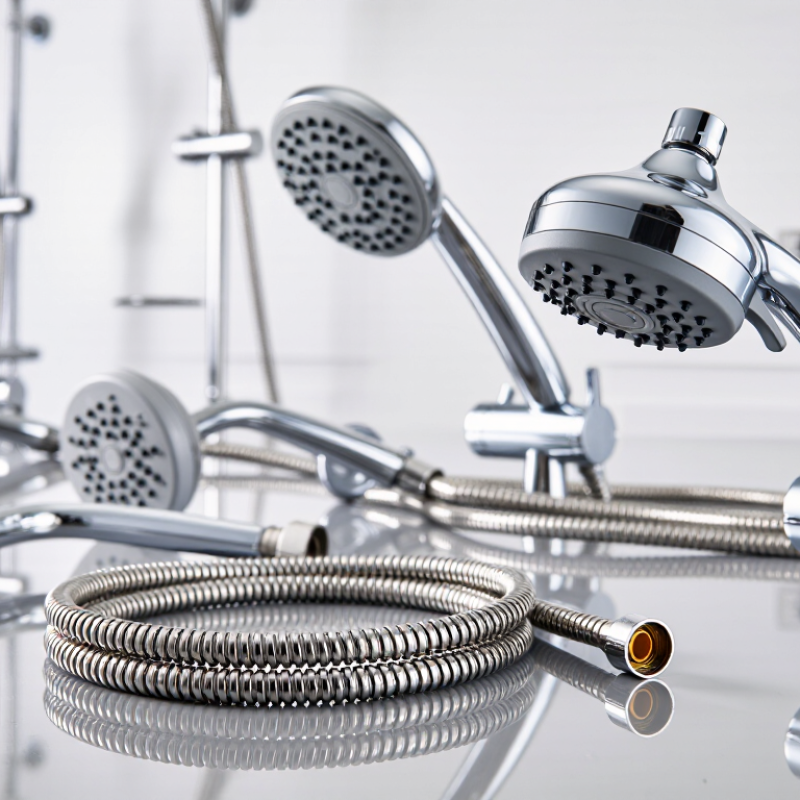
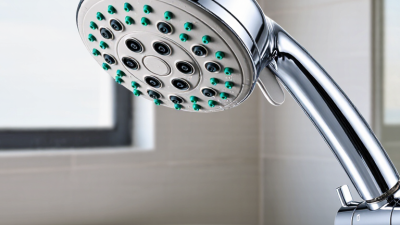
A hand shower is a handheld spray head connected to a water supply by a flexible hose. Its appeal is practical: users can direct the spray toward a child, a pet, or a hard-to-rinse corner. Global buyers also compare spray settings, handle comfort, hose length, finish durability, and compatibility with existing fittings. These details matter more than a polished product photo.

Fortune Business Insights estimated the global bathroom fixtures market at US$87.33 billion in 2023, with projected growth through 2032. This broad category includes many products, not hand showers alone, so it should not be treated as a hand-shower sales figure. Still, it signals a sizable, changing market. Housing types, water pressure, and consumer preferences differ across regions. Not every market agrees. A specification that works well in one home may disappoint in another.

Tips: Check the connection size, hose reach, and minimum operating pressure before ordering. Ask for spray-pattern and finish details, plus test documentation where available. A 1.5-metre hose may suit a compact shower, but feel short in a larger enclosure. Product comparisons are imperfect; clear technical sheets help reduce guesswork.

How to Evaluate Hand Shower Manufacturers

Evaluating a hand shower manufacturer starts with the product, not the catalog. Request samples from different production batches. Check whether the selector turns easily with wet hands, whether the nozzles are simple to clean, and whether the hose kinks near its fittings. Small details matter. A polished sample proves little if repeat orders vary. Ask for specifications covering the body, spray plate, hose, and finish, then compare them with the delivered product. Look for clear records of flow, pressure, leakage, and durability testing. Test methods should be stated, not implied.

A capable supplier can explain production capacity, lead times, quality checks, and how defects are handled. Ask how staff inspect threaded connections and control finish consistency; request dated inspection records where possible. A factory visit or independent audit may be useful for larger orders. Not every buyer needs one. Still, a video call cannot reveal every process. Confirm spare-part availability and packaging protection, especially for products shipped over long distances. Review warranty terms and sample packaging before approving an order. Communication matters too. Ask how the factory responds when a batch fails inspection. The answer may be less polished than a sales presentation, but more informative.

Top 10 Hand Shower Manufacturers for Global Buyers

Global buyers evaluating the top ten hand shower manufacturers should compare measurable performance, not polished catalog photos. A sample should deliver steady spray at low pressure, switch modes cleanly, and withstand repeated hose bending. Check flow rate, connection size, replacement-part availability, and documented material tests. Small details matter. Ask suppliers for batch inspection records, coating-test results, and packaging drop-test evidence. A factory tour helps, but it cannot replace dated inspection reports. Buyers sometimes overlook hose length; awkward reach can make a premium set frustrating.

Water efficiency offers a useful benchmark. The U.S. EPA WaterSense specification limits labeled showerheads to 2.0 gallons per minute, versus the federal maximum of 2.5 gpm. EPA estimates that an average family can save about 2,700 gallons annually by switching to WaterSense-labeled showerheads. This is a U.S. benchmark, not a universal purchasing rule. Buyers serving other markets should verify local requirements and test products under relevant pressure conditions. Before shortlisting ten manufacturers, review traceable test reports, warranty terms, lead times, and spare-part support. One awkward truth: published performance may not match every installation. Request independent results from production samples, not just showroom units.

Top 10 Hand Shower Manufacturers for Global Buyers

No. Comparison Dimension Global Buyer Benchmark What to Verify with a Supplier
1 Flow rate For the U.S. EPA WaterSense specification, qualifying showerheads have a maximum flow rate of 2.0 gallons per minute (7.6 L/min) at 80 psi. Request test reports stating flow rate, test pressure, and the exact product model. Check local rules for the destination market.
2 Inlet connection G1/2 (BSPP) and 1/2-inch NPT are common plumbing thread types in different markets; they are not interchangeable without a suitable adapter. Confirm thread standard, dimensions, included adapters, and compatibility with the intended hose and plumbing system.
3 Pressure performance Operating pressure and performance depend on the product design and local water system; there is no single global pressure specification for all hand showers. Ask for the minimum and maximum operating pressure, test conditions, and performance data at low and typical household pressures.
4 Product materials Hand showers may use polymer, metal, or combinations of materials. Requirements for materials in contact with drinking water vary by market. Request a bill of materials and applicable drinking-water compliance documents for the target country or region.
5 Spray settings Spray patterns and the number of settings are product-specific; there is no universal standard defining a required number of modes. Check samples for spray consistency, ease of switching, and performance at the water pressure expected in the destination market.
6 Hose compatibility Hose length, connection type, and construction vary among product ranges and regional configurations. Confirm hose length, end connections, bend and leak testing, and whether replacement hoses are available.
7 Temperature safety A hand shower does not, by itself, regulate or limit water temperature; temperature control is generally provided by the connected valve or mixing system. Check whether the installation requires a compatible thermostatic or pressure-balancing valve and verify any local safety requirements.
8 Testing and certifications Applicable standards and certification requirements depend on the country, product type, and sales channel. Request current certificates and laboratory reports, and confirm that their scope covers the exact model and intended market.
9 Finish durability Finish options and durability depend on the coating process and product construction; a single corrosion-test threshold does not apply globally to every finish. Ask for the finish specification, cleaning instructions, and relevant corrosion or coating test results.
10 Documentation and after-sales support Installation instructions, spare-part availability, warranty terms, and packaging requirements vary by supplier and destination market. Confirm warranty coverage, spare-part lead times, instruction languages, packaging details, and written after-sales procedures.

Comparing Product Ranges, Quality, and Certifications

A useful comparison of ten hand shower manufacturers starts with the product range, not the catalog cover. Look for handheld models with several spray patterns, replaceable nozzles, and hose lengths suited to common bathroom layouts. Check whether finishes include chrome, brushed surfaces, or other options, and ask if samples match production units. Small details matter. A button that feels stiff during a quick sample test may become frustrating in daily use.

Quality needs evidence beyond polished product photos. Ask about material specifications, leak testing, spray consistency, and inspection records for the exact model under consideration. A manufacturer may offer a broad range, yet vary in finish quality or packaging between product lines. That is easy to overlook. Requesting a sample and checking its joints, hose flexibility, and nozzle alignment can reveal practical issues early. No single factory certificate proves every showerhead performs equally well.

Certifications should be checked against the buyer’s destination and the product itself. Request current documents, confirm the model numbers match, and clarify whether testing covers the complete assembly or only selected components. Factory management certifications can indicate process controls, but they are not a substitute for product-level evidence. Compare warranty terms, spare-part availability, and response times too. A low quotation may omit replacement parts or detailed test reports; buyers should ask before treating two offers as equivalent.

Choosing a Manufacturer for Your Sourcing Needs

Top 10 Hand Shower Manufacturers for Global Buyers

Choosing a manufacturer means checking more than a polished sample. Samples are not production. Ask how spray performance, finish consistency, and leak resistance are tested across full production runs. The U.S. EPA’s WaterSense specification limits labeled showerheads to 2.0 gallons per minute, at least 20% below the standard 2.5-gallon rate, while requiring performance criteria. Request test results that show both water flow and usable spray coverage.

Evaluate materials, production capacity, and quality records before discussing price. Ask for inspection criteria, defect handling procedures, and clear sample-to-production approval steps. A small finish variation can look obvious under bathroom lighting. Check the details. ISO 9001 certification can indicate a quality management system, but it does not prove that every product meets your specifications. Verify the relevant product tests independently.

Global delivery deserves equal attention. UNCTAD’s Review of Maritime Transport 2024 reports that maritime shipping carries over 80% of world trade by volume. Ask how the manufacturer protects hand showers, hoses, and fittings against moisture and impact during transit. Confirm carton dimensions, lead times, and spare-part availability in writing. A low unit price may lose its appeal when packaging damage, delayed replenishment, or unclear warranty terms disrupt orders. Even careful sourcing has gaps; document them before production begins.

Hand Shower Sourcing: Maximum Flow-Rate Benchmarks

Flow-rate requirements vary by destination market. The U.S. federal limit is 2.5 gallons per minute (gpm); EPA WaterSense certification sets a lower 2.0 gpm threshold, while California’s limit is 1.8 gpm. When sourcing hand showers, confirm the applicable rules and test conditions for each target market.

Benchmarks at 80 psi. Sources: U.S. eCFR, EPA WaterSense, and California Energy Commission.