Best Flexible Hose Options for Efficient Fluid Transfer?
Flexible hoses play a crucial role in efficient fluid transfer across various industries. According to a recent report by Market Research Future, the global flexible hose market is projected to reach $1.5 billion by 2026, reflecting a compound annual growth rate (CAGR) of 4.7%. This growth is driven by the rise in fluid handling applications in sectors such as oil and gas, pharmaceuticals, and food processing.
These hoses offer several advantages. They provide flexibility, allowing for easy routing and installation in confined spaces. However, choosing the right flexible hose can be challenging. Factors like material compatibility and pressure ratings must be considered to ensure safety and efficiency. Mismanagement in selecting these hoses may lead to costly leaks or system failures.
Industry experts note that advancements in hose technology are vital. New materials are being developed for durability and chemical resistance. Yet, despite technological progress, some issues still arise, such as wear and tear from constant movement. Continuous improvement and careful selection are necessary for optimizing performance in fluid transfer applications.

Overview of Flexible Hoses and Their Applications
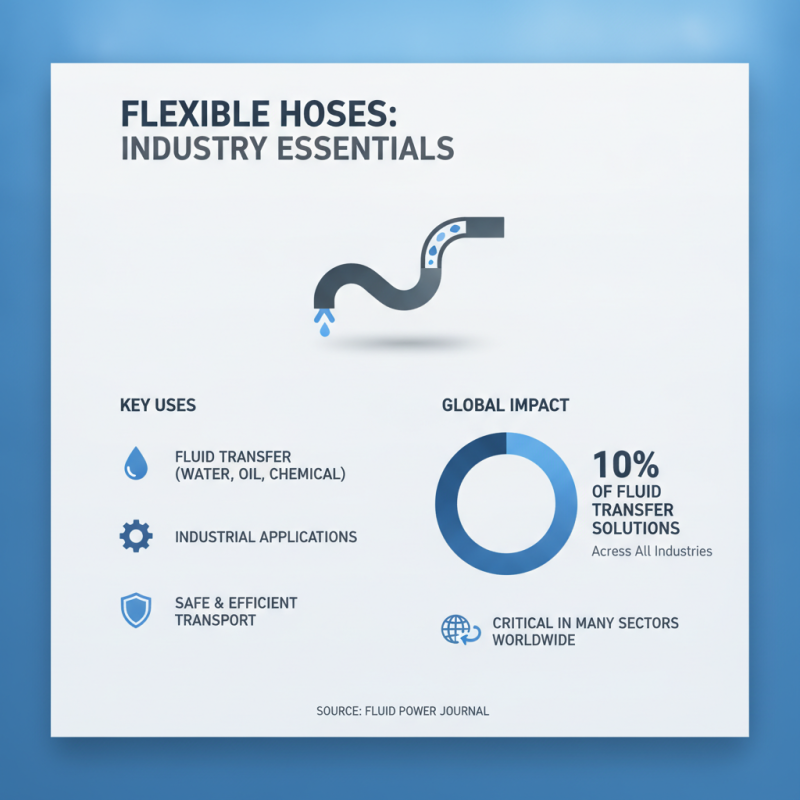
Flexible hoses are vital in many industries. They are used for transferring fluids safely and efficiently. According to the Fluid Power Journal, flexible hoses account for approximately 10% of all fluid transfer solutions used in industrial applications. These hoses can handle various fluids, including water, oil, and chemicals.
One notable application is in the automotive industry. Flexible hoses aid in fuel transfer, coolant flow, and brake fluid movement. Studies show that up to 70% of automotive maintenance relies on effective fluid transfer systems. However, improper installation or corrosion can lead to failures, causing downtime and safety risks. The need for regular inspections cannot be overstated.
In the agricultural sector, flexible hoses are crucial for irrigation systems. They facilitate the movement of water from sources to fields. Surveys indicate that farmers who use flexible hoses can increase irrigation efficiency by 30%. Despite this, many still underestimate the maintenance required for these hoses, exposing them to wear and tear. Regular servicing is essential to prolong their lifespan and ensure productivity.
Key Materials Used in Flexible Hose Manufacturing
When selecting flexible hoses for fluid transfer, the materials used in manufacturing play a crucial role. Common materials include rubber, PVC, and various metal alloys. Each material offers distinct advantages and drawbacks. Rubber hoses, for instance, are flexible and durable but can degrade under certain chemical exposures. PVC is lightweight and resistant to many chemicals, yet it may not withstand extreme temperatures.
A recent industry report highlights that rubber hoses account for approximately 40% of the market share due to their widespread use. Meanwhile, the metal hose segment has been growing steadily, projected to increase by 5% annually. This growth reflects a rising demand for hoses that can handle high pressures and complex systems.
Consider these tips when choosing a hose. Always assess the specific fluids that will be transferred. Temperature and pressure ratings are essential in your selection process. Regularly inspect hoses for wear and deterioration. Additionally, don't overlook the potential for leaks; even minor leaks can lead to larger issues. Ultimately, understanding the materials and their applications ensures efficient and safe fluid transfer in various industries.
Best Flexible Hose Options for Efficient Fluid Transfer
| Material |
Temperature Range (°C) |
Pressure Rating (bar) |
Inner Diameter (mm) |
Chemical Compatibility |
| PVC |
-10 to 65 |
8 |
10 |
Low to moderate chemicals |
| Rubber |
-30 to 80 |
10 |
25 |
Most hydrocarbons |
| Nylon |
-40 to 90 |
15 |
8 |
Strong acid and alkali |
| Silicone |
-60 to 200 |
5 |
12 |
Food-safe applications |
| Stainless Steel |
-200 to 400 |
20 |
15 |
Highly corrosive chemicals |
Factors to Consider When Choosing a Flexible Hose
When selecting a flexible hose for efficient fluid transfer, several factors come into play.
Material choice is vital. Common materials include PVC, rubber, and PTFE. Each has specific benefits and limits on temperature and pressure.
For example, PTFE hoses can operate effectively in high temperatures up to 500°F, while rubber hoses generally handle lower ranges better.
A report by the Fluid Power Institute highlights that material can affect hose longevity by up to 40%.
Additionally, the hose diameter influences fluid flow rates. A larger diameter reduces resistance, improving efficiency. However, oversizing can lead to increased cost and space issues.
According to research from the Hose and Fittings Association, choosing the correct diameter is key to maintaining optimal flow, with mismatched sizes
increasing energy consumption by 15% or more in some cases.
Compatibility with various fluids is also essential. Certain hoses corrode when in contact with specific chemicals. Using the wrong material can lead to leaks, posing safety risks.
Research indicates that improper hose selection can result in maintenance costs that are 30% higher over time.
Taking the time to assess these factors will promote efficient and safe fluid transfer.
Top Brands and Products for Efficient Fluid Transfer
When selecting flexible hoses for fluid transfer, it's crucial to consider several top-performing brands. Studies show that high-quality materials lead to longer lifespan and better performance. For instance, hoses made from reinforced PVC or rubber often exhibit superior flexibility and durability. Industry reports suggest that the right hose can reduce leakage risk by up to 40%, enhancing overall efficiency.
The fluid transfer process can be impacted by the hose's design. Hoses with a smooth inner surface tend to minimize friction, which can affect flow rates. A textured surface might increase wear, leading to potential failures over time. Always assess the maximum pressure ratings and temperature limits to ensure safety and reliability.
Tips: Regular inspections are vital. Look for wear and tear signs. It’s wise to replace hoses that show early signs of degradation. Also, consider using hoses compatible with various fluids to prevent cross-contamination. Therefore, always verify specifications before purchasing.
Maintenance Tips for Prolonging the Life of Flexible Hoses
Flexible hoses play a crucial role in fluid transfer applications. Proper maintenance can extend their lifespan and enhance performance. Regular inspections are essential. Look for signs of wear and tear, such as cracks or bulges. Damaged hoses can lead to leaks. Even a small crack can cause inefficiencies.
Cleaning your hoses is equally important. Debris and residues can accumulate inside. Flushing the hose with clean water can remove these particles. This practice helps maintain flow rates. Additionally, avoid sharp bends and kinks in the hose. These can weaken the material over time.
Consider the environment where the hoses are used. High temperatures and chemical exposure can affect their integrity. Using compatible materials is key. Storing hoses correctly is another aspect to consider. They should be coiled or rolled to avoid unnecessary stress. With these practices, users can ensure their hoses perform effectively over time.
Best Flexible Hose Options for Efficient Fluid Transfer
Understanding the flexibility ratings of different flexible hose materials can aid in selecting the best option for efficient fluid transfer. This chart compares five common hose materials based on their flexibility ratings on a scale of 1 to 10.