10 Best Flexible Hose Options for Your Home and Garden?
In recent years, the demand for Flexible Hose solutions in gardening and home maintenance has surged. According to the American Society of Plumbing Engineers, flexible connections in plumbing have been shown to reduce ruptures by up to 40%. This statistic emphasizes the need for reliable and versatile hoses.
Flexible hoses offer convenience, allowing ease of movement and interaction with various outdoor areas. They are lightweight and often constructed with durable materials, enhancing their adaptability. When used for watering gardens or cleaning outdoor spaces, the right flexible hose can transform ordinary tasks into efficient activities.
However, not all options are created equal. Some hoses may kink, leak, or degrade over time, prompting reflection on the choice of materials and design. Consumers must be vigilant about selecting products that prioritize performance and longevity. Understanding the nuances in quality can lead to more satisfactory experiences, ensuring that home and garden needs are met effectively.
Understanding Flexible Hoses: Definition and Benefits
Flexible hoses are an essential tool for both home and garden use. They are designed to bend and twist, making them versatile in various situations. These hoses can help you reach tight spots where rigid hoses struggle. When watering plants or cleaning outdoor surfaces, flexibility makes a significant difference.
One of the main benefits of flexible hoses is their lightweight design. This feature allows for easy handling and reduces user fatigue. Many people love to garden, but hauling heavy equipment can be exhausting. Additionally, flexible hoses are often made from durable materials that resist wear and tear. They can withstand various weather conditions, although they may need regular inspection for potential leaks.
It is essential to consider the length and diameter of the hose. Not every flexible hose is suited for every task. Shorter hoses may work well in small gardens, while longer ones are necessary for larger areas. Sometimes, users overlook this factor, leading to frustration during activities. Taking the time to choose the right hose can enhance efficiency and comfort in your gardening or cleaning tasks.
Types of Flexible Hoses for Home Use: A Comprehensive Overview
Flexible hoses are essential tools for various tasks around the home and garden. They come in different types, each serving specific purposes. One popular type is the garden hose, designed for watering plants and cleaning outdoor spaces. These hoses often feature durable materials to withstand outdoor conditions. Some are reinforced for added strength, while others are lightweight for easy handling.
Another option is the expandable hose. These hoses enlarge when filled with water, making them compact when not in use. They are ideal for those with limited storage space. However, they may not be as robust as traditional hoses. Users should keep in mind that flexibility can sometimes lead to tangling or kinking if not stored correctly.
Additionally, there are versatile hoses that can be used for both indoor and outdoor tasks. These hoses often come with adjustable spray nozzles, providing flexibility in water pressure and spray patterns. It's important to consider factors like length and material when choosing a hose. This can significantly impact the hose's durability and usability. Reflection on these choices helps ensure that you select the right hose for your needs.
10 Best Flexible Hose Options for Your Home and Garden
This chart displays the durability ratings for various types of flexible hoses, each rated on a scale from 1 to 10. This information can help you choose the right hose for your home and garden needs.
Key Features to Consider When Choosing a Flexible Hose
When selecting a flexible hose, consider its material. Common options include PVC, rubber, and polyurethane. Each material has unique properties. For instance, PVC is lightweight and affordable, while rubber is more durable. Polyurethane hoses offer flexibility in cold weather.
Think about where you’ll use the hose. A lightweight hose is ideal for residential gardens. Heavy-duty options may suit more demanding tasks.
Next, examine the hose length. The right length can prevent kinks and tangling. A short hose might limit your reach. However, a very long hose can be cumbersome. Look for hoses with a good recoil for easy storage. Additionally, check the fittings. Brass or stainless steel connectors resist corrosion and ensure longevity.
Don’t overlook the hose’s diameter. A wider diameter allows for a higher flow rate. However, narrower hoses can be more manageable. Finally, consider other features like anti-kink technology. While some hoses are easy to use, they may not last long. Researching and comparing options is essential to making an informed choice. Take your time to reflect on what you genuinely need.
Top 10 Flexible Hose Options for Gardens: A Detailed Guide
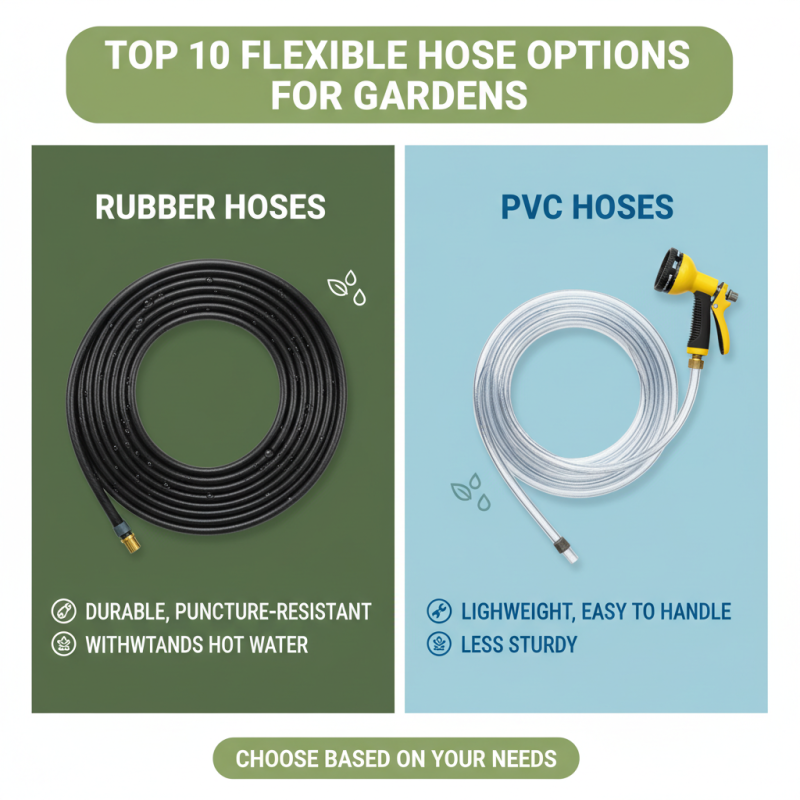
When selecting a flexible hose for your garden, consider the material. Many hoses are made from rubber, PVC, or a combination. Rubber hoses are durable and resistant to punctures. They can withstand hot water, making them versatile for various tasks. PVC hoses are lightweight and easier to handle. However, they may not be as sturdy. Choose based on your specific needs.
Another key factor is the hose length. Common lengths range from 25 to 100 feet. Longer hoses offer more reach but can be cumbersome. Think about your garden layout before deciding. If your space is compact, a shorter hose might be sufficient. Additionally, look for features like collapsibility for easy storage.
Check the fittings and connectors as well. Brass fittings are often reliable, but plastic ones are lighter. Ensure they fit snugly to prevent leaks. Some hoses have built-in connectors that can simplify your gardening routine. Finding the right combination of features can be a process. Consider what works best for you. Your choice will impact your gardening experience.
Maintenance Tips for Ensuring Longevity of Flexible Hoses
Flexible hoses are essential for various tasks in the home and garden. Proper maintenance can greatly enhance their lifespan. Regularly check for kinks or signs of wear. A small hole can lead to leaks, which waste water. Inspect the hose fittings too. Loose connections can create pressure points, leading to bursts.
Cleaning is crucial. Rinse out any soil or debris after each use. This prevents clogs and ensures smooth water flow. Store the hoses in a cool, dry place. Direct sunlight can deteriorate the material. When not in use, coil the hose neatly to avoid bends. Remember, even high-quality hoses need care.
Consider using protective covers during winter. This protects them from freezing temperatures. Avoid dragging hoses over rough surfaces. This can wear down the outer layer faster than expected. Reflect on your hose usage habits. Are you treating them well enough? Small changes can make a big difference in their longevity.