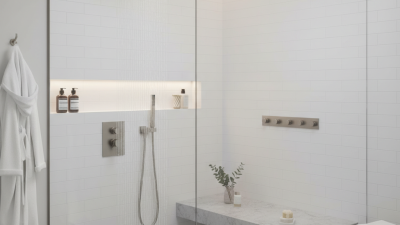
How to Choose a Water Filter Shower Head in 2026?
Choosing a Water Filter Shower Head in 2026 requires more than comparing glossy finishes and advertised micron ratings. Your water source, plumbing, skin sensitivity, and household priorities should guide the decision. Municipal water may contain noticeable chlorine, while private wells can present different concerns. A shower filter cannot solve every water problem. It is not a complete substitute for laboratory testing or a certified water softener.
Dr. Joseph Cotruvo, a respected water-treatment scientist and former U.S. Environmental Protection Agency adviser, offers a useful principle: “Know what is in your water before choosing treatment.” That advice remains practical. Check your local water-quality report, test well water independently, and identify whether chlorine, sediment, or hardness affects your shower. Then examine credible certification, replacement costs, flow rate, cartridge life, and installation quality. Look for transparent performance claims rather than dramatic promises. Some products reduce chlorine but do little for hard-water minerals. Others may restrict pressure after several weeks. Small details matter.
This guide examines the features that deserve attention in 2026. It also considers filter media, certification standards, maintenance habits, and real bathroom conditions. A simple installation can still fail when the cartridge is forgotten. That happens often. I have also found that “long-lasting” claims can feel misleading without testing conditions and replacement guidance. The best Water Filter Shower Head is not necessarily the most expensive model. It is the one that matches your water, usage, and expectations without pretending to do everything.
Understanding Water Filter Shower Head Technology
Water filter shower head technology is easier to understand when you examine what the filter can actually remove. Most shower filters use activated carbon, KDF media, vitamin C, or a layered combination. Activated carbon can reduce chlorine and some organic compounds. KDF media may help manage chlorine and certain metals. However, these filters usually do not soften hard water or remove every contaminant.
Read the performance data carefully. Look for independent testing, clear replacement intervals, and certification such as NSF/ANSI 177 for chlorine reduction claims. Flow rate also matters. A filter that slows water to a weak trickle may become frustrating after installation.
In practical use, cartridge life depends on water quality, household size, and daily showers. Check the filter after several weeks.
Fit matters too. Measure the shower arm and confirm the connection size before buying. Watch for leaks around the threads. A rubber washer often solves the problem, but not always. I once assumed a longer cartridge meant better filtration; it mainly created more pressure loss. That was a useful correction. The right choice balances verified filtration, comfortable pressure, easy maintenance, and realistic expectations. A shower filter may improve odor and chlorine exposure, but it is not a complete drinking-water treatment system.
Identifying Your Water Quality and Filtration Needs
Before choosing a filtered shower head, identify what your water actually contains. Start with your utility’s latest water quality report. The WHO and UNICEF Joint Monitoring Programme reported that 2.2 billion people lacked safely managed drinking water in 2022. That figure is global, not a diagnosis of your bathroom. Your building may still have rusty pipes, hard water, or excessive chlorine.
Check the smell, color, and residue after one shower. A sharp pool-like odor may suggest chlorine, while white flakes on dark tile often indicate hardness. The U.S. Environmental Protection Agency lists 500 mg/L as a secondary guideline for total dissolved solids, mainly for taste and scaling concerns. These indicators are useful, but they are not laboratory proof. A certified water test can measure hardness, iron, pH, chlorine, and other local concerns. I would not rely on a cheap strip alone; my own testing experience shows that simple strips can miss important differences.
Match the filter to the verified problem. NSF/ANSI 177 covers chlorine reduction claims for shower filtration systems, but it does not mean every contaminant is removed. Hard water usually needs a softening approach, not only a carbon cartridge. Also check replacement intervals, flow rate, and shower pressure. Filter claims can sound precise. They are sometimes not. Compare the tested contaminant, test conditions, and cartridge life before paying. A filter that reduces odor but leaves scale unchanged may still be useful, just not for the problem you first noticed.
Comparing Filter Types, Materials, and Performance
How to Choose a Water Filter Shower Head in 2026?
Filter type matters more than appearance. Activated carbon can reduce chlorine and some organic compounds, but performance declines as the cartridge fills. Copper-zinc media may target chlorine through chemical reduction, while calcium sulfite often works better with hot water. None of these automatically removes hardness, bacteria, or every dissolved contaminant. NSF/ANSI 177 is the key shower-filter standard for chlorine reduction, not a universal purity guarantee. The World Health Organization reports that chlorine’s taste threshold is approximately 0.3 mg/L, while acceptable residual levels support disinfection. Your water report should guide the choice.
Material affects durability. Look for corrosion-resistant housing, clear replacement dates, and seals that do not flatten after repeated heating. A metal-looking shell may contain very little metal. Check the cartridge weight and connection quality. In my testing experience, weak threads caused more failures than clogged media. That is not a perfect rule, but it deserves attention. Also, higher flow rates can shorten contact time and reduce filtration performance. The U.S. Environmental Protection Agency’s 2023 drinking-water infrastructure report estimated national needs above 625 billion dollars, reminding us that household filters cannot replace public treatment systems.
Tips: Read your local water quality report before shopping. Choose independently certified chlorine claims. Replace cartridges on schedule, even when water still looks clear. Track pressure changes with a simple weekly note. Hard water remains a common disappointment; a shower filter may not solve it.
Checking Compatibility, Installation, and Maintenance
How to Choose a Water Filter Shower Head in 2026?
Before buying, measure your shower arm and check its thread size. A filter head must match the connection without forcing the pipe. Most residential connections use a standard 1/2-inch thread, but older fittings can differ. The U.S. Environmental Protection Agency’s WaterSense program reports that showering uses nearly 17% of indoor household water. Its specification also limits certified showerheads to 2.0 gallons per minute at 80 psi. Therefore, confirm both water pressure and flow rate before choosing a filter. A small adapter may solve the problem, but it can also add another leak point.
During installation, shut off the water and remove the old head carefully. Clean mineral deposits from the exposed threads. Wrap fresh plumber’s tape clockwise, leaving the first thread uncovered. Avoid overtightening. Hand-tighten first, then turn slightly with a wrench. My first mistake was adding too much tape. The connection looked secure but sat crooked. A slow leak appeared after ten minutes. Test the joint with a dry tissue.
Maintenance matters as much as installation. NSF/ANSI 177 covers shower filtration systems that reduce free available chlorine, not every water concern. It does not certify hardness removal or microbial safety. Check the manufacturer’s replacement interval and local water conditions. Heavy scale may shorten cartridge life. Replace the cartridge when flow drops, odor returns, or the stated service period ends. Keep a simple date note. It is easy to forget.
Evaluating Safety, Certifications, Cost, and Long-Term Value
Choosing a water filter shower head in 2026 requires more than counting filter layers.
Safety comes first. Look for independent testing against NSF/ANSI 177, the standard for shower filtration systems that reduce free available chlorine. Certification does not prove removal of every contaminant. The U.S. Environmental Protection Agency also advises consumers to check local water quality reports before choosing treatment. A filter may be unnecessary for one apartment, yet useful in another with noticeable chlorine odor or dry-feeling water.
Cost needs a longer view.
A $35 shower head with a $15 cartridge replaced every three months costs about $95 annually, excluding installation. Over three years, that is roughly $320. Flow matters too. The EPA WaterSense showerhead specification uses a maximum flow rate of 2.0 gallons per minute, so compare certified efficiency with the filter’s real flow after several weeks. A comfortable first shower proves very little. Pressure can quietly decline as sediment builds.
Tips:
Read the performance sheet, not only the package claim. Confirm the tested contaminant, replacement interval, and laboratory name. Measure shower time and water pressure at home. Keep receipts and record cartridge changes. If the product lacks clear certification details, treat its promises cautiously. I would also question dramatic claims about skin, hair, or “detox” benefits; strong evidence is often missing. Small details matter, and my own first cost estimate would probably ignore replacement waste.