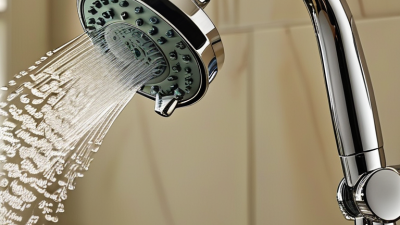
China’s shower fittings sector has evolved from basic metal tubing into a highly competitive export industry. This guide, “China Top 10 Shower Hose Manufacturers for Global Buyers,” examines suppliers through practical purchasing criteria. These include material quality, production capacity, testing procedures, customization, and export experience.
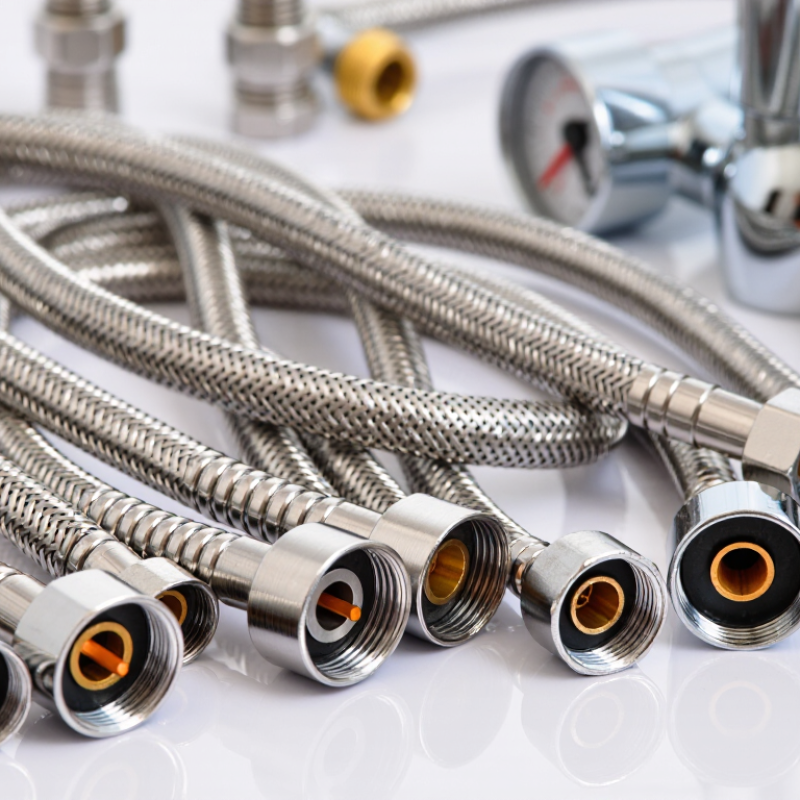
A reliable Shower Hose should resist twisting, surface corrosion, and repeated pressure changes. Buyers should inspect the inner tube, braiding density, connector threads, and sealing washers. Small details matter. A loose fitting can cause leakage after installation. Stainless steel may look similar across factories, yet grade, wall thickness, and polishing quality can differ considerably.
“Product consistency matters more than a low first quotation,” says Li Wei, an independent plumbing-systems consultant with over fifteen years of sourcing experience. His observation reflects a common purchasing lesson: the cheapest hose is not always the lowest-cost option. Packaging damage, inconsistent lengths, failed pressure tests, and delayed replacement parts can quickly increase expenses. This ranking considers those risks alongside factory capabilities and customer support. However, no list remains perfect. Supplier certifications, equipment, and lead times can change. Global buyers should still request current samples, test reports, factory evidence, and clear warranty terms before placing orders. The selected manufacturers represent useful starting points, not automatic approvals. Each company deserves careful verification.
A genuine shower hose manufacturer does more than connect metal strips and fittings. It controls tube forming, welding, braiding, assembly, and final inspection under one system. Buyers should ask for process records, material certificates, and batch traceability. A carton label is not enough.
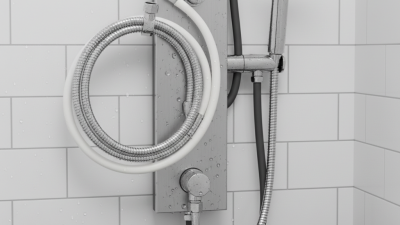
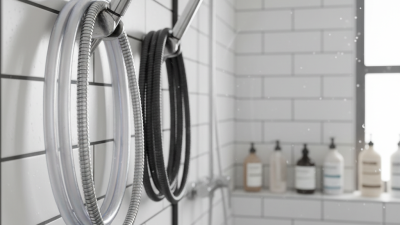
EN 1113 specifies performance requirements for shower hoses, including pressure resistance, leakage control, and durability. Reliable factories test samples with repeated bending and water-pressure cycles. The details matter: a hose should flex beside a tiled wall without sharp kinks, loose braid, or dripping connectors. Many suppliers claim ISO 9001 certification. The ISO Survey 2022 recorded more than 1.2 million ISO 9001 certificates worldwide, but certification alone does not prove production discipline. Audit scope and current records deserve attention.
China’s manufacturing scale also affects delivery capability. The World Bank’s 2023 Logistics Performance Index ranked China 19th globally, supporting strong export coordination. Yet logistics performance cannot replace engineering evidence. A serious supplier should provide inspection plans, production photos, test equipment details, and corrective-action reports. Ask for a pre-shipment sample from the actual production line. Samples can flatter a factory.
Some manufacturers still rely heavily on manual checks. That may create uneven crimping or inconsistent thread dimensions. Buyers should compare rejection rates, material grades, warranty records, and response times. The best evaluation is practical: bend the hose repeatedly, inspect both ends, and verify the test report against the delivered batch.
China Top 10 Shower Hose Manufacturers for Global Buyers
How to Evaluate China’s Top Shower Hose Manufacturers
China’s shower hose sector serves a growing international plumbing market. Grand View Research valued the global plumbing fixtures market at approximately USD 87.36 billion in 2022, with continued growth expected through 2030. This figure does not isolate shower hoses, but it shows the scale of buyer demand. Treat factory claims as starting points, not proof.
Check material certificates, wall thickness, thread accuracy, and assembly records. Stainless steel grades should match the purchase specification. For flexible hoses, request test evidence aligned with EN 1113, including pressure, leakage, and bending performance. Corrosion resistance also deserves attention. ISO 9227 salt-spray testing can reveal weak plating, although laboratory results may not predict every bathroom environment. Ask for batch-level reports, not only polished samples.
Visit the production line when possible. Watch crimping, washer installation, and final pressure testing. A reliable manufacturer should explain its sampling plan and failure handling. Compare audit findings with ISO 9001 records, but do not treat certification alone as quality assurance. The International Trade Centre recommends examining supplier reliability, delivery capability, and product compliance when assessing cross-border sourcing. Request three production samples from separate batches. Small details matter. One overlooked washer can cause returns.
A practical scorecard can assign weight to testing, material traceability, defect rates, export experience, and response speed. Leave room for uncertainty. Some manufacturers provide impressive documents but inconsistent factory discipline. Independent inspection before shipment remains worthwhile, especially for first orders.
This buyer-oriented evaluation framework prioritizes product durability, pressure and leak testing, regulatory documentation, delivery capability, customization, and after-sales support. The percentages represent recommended procurement weights rather than rankings of individual companies or brands.
China remains a major sourcing hub for shower hoses, supported by mature metalworking and bathroom hardware supply chains. UN Comtrade data under HS 8307 places China among the leading exporters of flexible metal tubing, although this category includes products beyond shower hoses. Grand View Research also reports steady growth in the global plumbing fixtures market, with demand driven by renovations, hospitality projects, and water-saving upgrades.
For global buyers, factory evaluation should go beyond price. Check stainless steel grade, inner hose material, connector machining, and crimping strength. Ask for pressure-cycle, leakage, torsion, and salt-spray test records. EN 1113 is a useful reference for shower hose performance in many European projects. Buyers serving other regions should verify local requirements instead of assuming one certificate works everywhere. That mistake happens.
Tips: Request a sample from the same production line used for mass orders. Measure thread accuracy with a gauge. Inspect the gasket after repeated bending. Confirm packaging protects polished surfaces during sea transport.
Production experience matters, but it can also create blind spots. Some factories rely on familiar designs and overlook changing water-pressure conditions. A stronger supplier shares traceable material records, inspection photos, corrective-action reports, and realistic lead times. Compare at least three manufacturers using the same checklist. The cheapest quotation may hide thinner tubing, weaker plating, or inconsistent assembly.
For global buyers comparing China’s top ten shower hose manufacturers, material selection should match water quality and installation conditions. Stainless steel 304 offers balanced corrosion resistance and cost control. Stainless steel 316 performs better in coastal or high-chloride environments. EPDM inner tubes can support hot-water durability, while PVC options often reduce price. The 2024 Grand View Research outlook values the broader global bathroom accessories market at more than USD 20 billion, increasing pressure on suppliers to prove quality, not merely offer low prices.
A reliable factory should provide pressure, burst, leakage, bending-cycle, and salt-spray test records. EN 1113 is a useful reference for shower hose performance in many European projects. For drinking-water contact applications, buyers may need NSF/ANSI/CAN 61, WRAS, ACS, or equivalent approval. Requirements differ by destination. ISO 9001 supports process control, but it does not certify product safety. The ISO Survey reports more than one million ISO 9001 certificates worldwide, so the certificate alone proves little.
Customization may include hose length, connection size, thread type, surface finish, packaging, and private-label markings. Ask for samples before approving mass production. Confirm whether brass fittings are solid or plated zinc alloy. Request material declarations and batch traceability. One weakness remains: catalog claims can outpace evidence. Independent testing is wiser. A supplier’s willingness to disclose failed tests often reveals more than polished sales language.
| No. | Manufacturer Profile | Key Product Range | Typical Materials and Construction | Common Sizes | Performance Range | Certification and Compliance Routes | Customization Options |
|---|---|---|---|---|---|---|---|
| 1 | Manufacturer Profile 01 Metal-Flexible Hose Specialist |
Hand-shower hoses Standard bathroom hoses Retail-ready sets | Stainless-steel strip with flexible corrugated construction; EPDM or thermoplastic inner tube; brass or zinc-alloy end fittings. | 1.2 m, 1.5 m, 1.8 m and 2.0 m; commonly supplied with G1/2 connections. | Typical working pressure: 0.5–1.0 MPa; temperature range commonly around 0–70°C, depending on the inner tube. | ISO 9001 quality-system documentation may be available; WRAS, ACS, KTW-BWGL or NSF/ANSI 61 routes can be considered for applicable markets and materials. | Hose length, surface finish, connector shape, gasket material, packaging artwork, barcode labels and private-label assembly. |
| 2 | Manufacturer Profile 02 PVC Hose Specialist |
PVC shower hoses Lightweight hoses Color-matched hoses | Flexible PVC or multilayer PVC construction with smooth or spiral outer surfaces; brass, stainless-steel or plated alloy connectors. | 1.2–2.5 m standard lengths; common internal diameters approximately 8–12 mm. | Typical working pressure: 0.6–1.0 MPa; temperature suitability is formulation-dependent and often specified up to approximately 60–70°C. | RoHS and REACH material declarations are commonly requested; potable-water approvals require formulation-specific testing. | Transparent, white, silver, black or custom colors; smooth/spiral texture, custom logo, connector plating and retail packaging. |
| 3 | Manufacturer Profile 03 Silicone and TPE Hose Specialist |
Soft-touch hoses Anti-kink designs Premium bathroom hoses | Silicone, TPE or TPU inner and outer layers; reinforced structure may include textile braid or polymer support. | 1.5 m, 1.8 m and 2.0 m; G1/2 fittings are widely used for shower applications. | Typical working pressure: 0.5–0.8 MPa; temperature range commonly specified between 0°C and 70–90°C, depending on the compound. | REACH, RoHS and material-safety documentation may be supplied; drinking-water compliance must be tested for the exact compound. | Soft-touch colors, matte or gloss finish, tactile patterns, custom tube hardness, anti-twist fittings and branded cartons. |
| 4 | Manufacturer Profile 04 Stainless-Steel Braided Hose Specialist |
Braided hoses High-flexibility hoses OEM assemblies | 304 stainless-steel braid over EPDM, PVC or PEX inner tube; machined brass inserts and pressed ferrules. | 1.2–2.0 m standard; custom lengths commonly produced for project orders. | Typical working pressure: 1.0 MPa or above when validated; burst pressure depends on braid density, tube design and fittings. | ISO 9001 documentation may be available; applicable projects may request EN 1113, WRAS, ACS or other market-specific testing. | Braid wire diameter, braid density, fitting geometry, hose length, anti-twist collar, ferrule finish and pressure-test criteria. |
| 5 | Manufacturer Profile 05 Anti-Twist Hose Specialist |
360° swivel hoses Anti-tangle hoses Hotel-grade hoses | Stainless-steel or polymer outer construction with swivel nuts, rotating connectors and EPDM or thermoplastic inner tube. | 1.5 m and 1.8 m common; 1.0–2.5 m available for selected programs. | Typical working pressure: 0.5–1.0 MPa; swivel performance is normally validated through repeated rotation and cycle testing. | ISO 9001 may cover the manufacturing system; destination-specific water-contact or chemical-compliance testing can be arranged. | Swivel mechanism, connector angle, anti-twist collar, hose length, surface coating, private-label packaging and test-cycle requirements. |
| 6 | Manufacturer Profile 06 Hygienic Inner-Tube Specialist |
Low-odor hoses Water-contact hoses Public-project supply | EPDM, PEX, TPU or certified thermoplastic inner tube selected for reduced odor and improved resistance to hot water; external metal or polymer cover. | 1.2–2.0 m; inner diameter commonly approximately 8–12 mm. | Typical working pressure: 0.6–1.0 MPa; temperature rating depends on the selected tube compound and fitting assembly. | Potential routes include WRAS, ACS, KTW-BWGL, NSF/ANSI 61 or other local water-contact requirements; exact approval is product-specific. | Inner-tube compound, odor limits, extraction-test requirements, connector material, gasket specification, traceability and batch documentation. |
| 7 | Manufacturer Profile 07 Decorative-Finish Hose Specialist |
Brushed-finish hoses Matte-black hoses Color-coordinated sets | Stainless-steel or polymer hose body with PVD, electroplated, powder-coated or painted surface finishes; brass or stainless fittings. | 1.5 m and 1.8 m standard; project-specific lengths available. | Typical working pressure: 0.5–1.0 MPa; coating durability is normally assessed through abrasion, humidity and corrosion testing. | RoHS and REACH declarations are commonly requested; coating and corrosion reports may be supplied for specific finishes. | Brushed nickel, chrome, gunmetal, matte black, gold and custom colors; logo marking, matching hand-shower parts and gift-box packaging. |
| 8 | Manufacturer Profile 08 Heavy-Duty Project Hose Specialist |
Commercial shower hoses Institutional projects Replacement hoses | Reinforced EPDM or thermoplastic inner tube with stainless-steel braid or robust polymer cover; heavy-wall brass end fittings. | 1.5–2.5 m; non-standard lengths may be produced for hotels, hospitals and prefabricated bathroom systems. | Typical working pressure: 1.0 MPa or higher when engineered and tested; temperature and cycle requirements are specified by project. | ISO 9001 may be available; EN 1113, WRAS, ACS, NSF/ANSI 61 or local building-project requirements may be evaluated. | Reinforcement level, pressure-test protocol, pull-out resistance, cycle testing, special end fittings, batch traceability and project packaging. |
| 9 | Manufacturer Profile 09 Integrated Shower-Set Supplier |
Hose and hand-shower sets Rail kits Complete bathroom kits | Hose matched with ABS, stainless-steel or brass hand showers, wall brackets, slide rails and standard G1/2 accessories. | Hose lengths of 1.5 m or 1.8 m are common; rail lengths often range from approximately 600–900 mm. | Hose performance commonly falls within 0.5–1.0 MPa working pressure; spray-pattern and flow-rate testing may be included. | ISO 9001 may apply to the factory; RoHS, REACH, water-contact and market-specific shower-product tests can be requested. | Spray modes, hand-shower diameter, rail length, finish matching, flow restrictors, packaging configuration, manuals and assembly instructions. |
| 10 | Manufacturer Profile 10 Small-Batch OEM and Export Specialist |
Private-label hoses Trial orders Multi-market packaging | Flexible PVC, TPE, silicone, EPDM or stainless-steel braided constructions selected according to target price and market requirements. | Standard 1.2–2.0 m; custom length, connector and package combinations available for approved specifications. | Typical working pressure: 0.5–1.0 MPa; final pressure, temperature and leakage limits should be confirmed by pre-shipment testing. | Factory quality documentation, RoHS/REACH declarations and third-party inspection support may be available; certifications must match the exact SKU. | Low-volume color matching, custom labels, multilingual packaging, mixed-SKU cartons, connector standards, inspection plans and sample approval. |

When comparing China’s top shower hose manufacturers, global buyers need more than a polished catalog. Request a factory profile, production capacity, material specifications, and recent pressure-test records. Check whether stainless steel grade, inner-tube material, thread size, and working temperature match your market requirements. Samples should be tested before bulk approval.
The ISO Survey 2022 recorded 1,265,216 ISO 9001 certificates worldwide. Certification can support process control, but it does not prove every hose is reliable. Ask for batch inspection records, leak-test results, salt-spray data, and traceability codes. A useful comparison table should include defect rates, minimum order quantities, tooling fees, lead times, and response speed. Small details matter.
Shipping terms deserve equal attention. UNCTAD’s Review of Maritime Transport reports that over 80% of global merchandise trade moves by sea. Compare FOB, CIF, and DDP quotations carefully, including insurance and destination charges. Confirm carton dimensions and loading quantities before signing. I would also request a pre-shipment inspection, even when the supplier has strong certificates. It adds cost, but one damaged container can cost more. A low quote can still be the wrong decision. Supplier scoring is useful, yet human judgment remains imperfect. Recheck assumptions after the first order.